
Blog
24mm Flat Glazing Packers for uPVC Windows: Best Uses and Common Mistakes

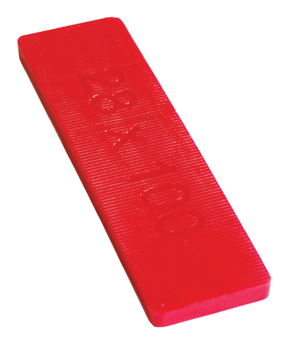
Our FP24 flat glazing packers are designed for 24 mm glazing systems and are a practical choice for uPVC window installations where accurate spacing, levelling, and support are essential. We make them from polypropylene, so they remain stable and dimensionally true under load, while also being non-compressible and weather-resistant. That makes them well suited to supporting sealed units in uPVC frames where long-term consistency matters.
What We Use 24mm Flat Glazing Packers For in uPVC Windows
In uPVC windows, we use our FP24 packers to help keep glazed units square, level, and properly supported inside the frame. They are designed to promote consistent alignment, even weight distribution, and a stress-free fit, which helps reduce the risk of gasket damage, rattling, and deflection over time. These are exactly the kinds of issues installers want to avoid on uPVC window jobs.
Best Use 1: Supporting the Sealed Unit Correctly
One of the main uses of 24mm flat glazing packers in uPVC windows is to provide dependable support beneath the sealed unit. Because the packers are designed to remain stable under load, they help keep the unit seated correctly and reduce the chance of uneven pressure developing later. For routine uPVC installations, this is one of the most important functions they perform.
Best Use 2: Levelling the Unit During Installation
We also use FP24 packers to level the unit during installation. Since the range is available in 1 mm, 2 mm, 3 mm, 4 mm, 5 mm, and 6 mm, it allows installers to make anything from a very small finishing correction to a more substantial adjustment where the opening or frame needs more support. That flexibility is useful in uPVC work, where even a small difference in level can affect how the unit sits and performs.
Best Use 3: Matching the Thickness to the Job
A big advantage of the FP24 range is that each thickness has a clear role:
- 1 mm is best for fine adjustment and final alignment
- 2 mm is best for minor levelling and small corrections
- 3 mm is a standard everyday size for general installations
- 4 mm is useful for medium gaps and more noticeable correction
- 5 mm is suited to larger spacing requirements and heavier sealed units
- 6 mm is intended for maximum adjustment and base support
For uPVC window installations, choosing the right thickness is often what separates a clean, stable fit from a setup that causes problems later.
Best Use 4: Dealing with Uneven Openings and Heavier Sections
Not every uPVC window installation is perfectly straightforward. Where the opening is uneven, the frame needs more correction, or the unit carries more load, our 4 mm, 5 mm, and 6 mm FP24 packers are especially useful. We recommend these thicknesses for supporting heavier sections, aligning uneven openings, and high load-bearing positions, which makes them valuable when the job needs more than routine levelling.
Best Use 5: Trade Installations That Need Consistency
Because our FP24 packers are precision-moulded, colour-coded by thickness, and supplied in packs of 1000, they are well suited to trade buyers who want consistent results across repeated uPVC window installations. We also offer bulk trade pricing and same-day dispatch before 1 PM, Monday to Friday, which makes them practical for installers and firms that rely on steady stock and fast reordering.
Common Mistake 1: Choosing Thickness by Guesswork
One of the most common mistakes in uPVC window work is choosing the packer thickness by habit rather than by the actual gap and support requirement. If the packer is too thin, the sealed unit may not be fully supported. If it is too thick, it can create unnecessary pressure, affect alignment, or make the installation less precise. Our FP24 range is built to give installers the correct thickness options so they can match the packer to the job properly.
Common Mistake 2: Using a Light Thickness for a Heavy Support Job
Another common mistake is relying on 1 mm or 2 mm packers where the installation clearly needs more support. We position 5 mm packers for larger spacing requirements, heavier sealed units, and structural support points, while 6 mm is intended for large gaps, base packing, and high load-bearing positions. When a uPVC window job needs stronger support, it is better to use a thickness designed for that role.
Common Mistake 3: Overcomplicating the Setup with the Wrong Combination
Installers sometimes try to make a job work by relying too much on smaller thicknesses when a single larger packer would be more appropriate. Because the FP24 range already spans 1 mm to 6 mm, many uPVC window installations can be handled more cleanly by choosing the nearest suitable thickness from the start. In practice, that usually creates a tidier and more consistent result. This last point is a practical inference based on the available thickness range and intended uses.
Common Mistake 4: Using Materials That Do Not Stay Stable Under Load
With uPVC windows, long-term stability matters just as much as getting the unit into place on installation day. Our FP24 packers are made from polypropylene and are designed to remain dimensionally true under load. Using materials that compress, shift, or lose shape over time can compromise support and lead to issues later, especially in installations where alignment and even weight distribution are important.
Common Mistake 5: Treating Every uPVC Window Job the Same
Some uPVC windows only need fine levelling, while others need more noticeable correction or stronger support. That is exactly why the FP24 range covers six thicknesses, from fine adjustment at 1 mm to maximum adjustment and base support at 6 mm. A more reliable approach is to assess the actual frame, gap, and load requirement first, then choose the thickness that best matches the installation.
Final Thoughts
For uPVC windows, 24mm flat glazing packers are best used where you need accurate spacing, dependable support, and consistent levelling beneath the sealed unit. Our FP24 range combines 24 mm × 100 mm dimensions, 1 mm to 6 mm thickness options, polypropylene construction, and suitability for uPVC, aluminium, and timber frames, making it a practical option for trade installations. Used correctly, they help keep units square, level, and properly supported; used carelessly, the wrong thickness can create avoidable fitting problems.