
Blog
How to Choose the Right Thickness for 20mm Flat Glazing Packers

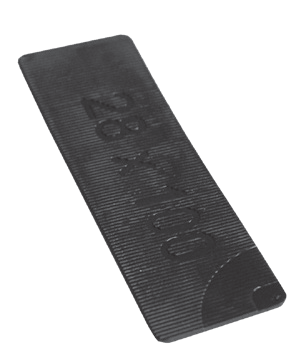
Choosing the right thickness for 20mm flat glazing packers is a little more straightforward than with wider product ranges because the FP20 line focuses on four practical thicknesses only: 1 mm, 2 mm, 3 mm, and 5 mm. That means the decision is less about working through a long list of options and more about deciding whether the job needs fine correction, minor levelling, standard everyday packing, or stronger load support. Our FP20 packers are made for 20 mm glazing systems and are designed to level, support, and protect sealed units so they stay square, secure, and rattle-free.
What FP20 Glazing Packers Are Built to Do
We use our FP20 flat glazing packers to provide consistent, accurate spacing in 20 mm glass and sealed unit installations. They are made from polypropylene, resist compression and weathering, and are designed to maintain their exact thickness under load. That matters because the purpose of a glazing packer is not just to fill space, but to support the unit properly and help prevent glass edge stress, cracking, and distortion.
The First Question to Ask: Is This a Fine Adjustment Job or a Support Job?
A simple way to choose the right FP20 thickness is to first decide what kind of correction the installation actually needs. Most jobs fall into one of these four categories:
- very light finishing adjustment
- minor levelling
- normal day-to-day support
- heavier support or base packing
Because the FP20 range has only four thicknesses, each one has a clearer role than in some broader ranges. That makes selection easier for installers who want to work quickly without overcomplicating the decision. This framing is an inference based on the listed use cases for each thickness.
Choose 1mm When the Installation Is Already Nearly Correct
Our 1 mm FP20 packers are best when only minimal correction is needed. We use them for:
- final alignment adjustments
- removing very small gaps
- fine-tuning after main packing
This is the thickness to choose when the unit is already close to where it should be and you only need a finishing adjustment rather than a real lift or correction.
Choose 2mm for Small But Noticeable Corrections
Our 2 mm FP20 packers sit between very light finishing work and standard support. We use them for:
- slightly uneven surfaces
- minor spacing corrections
- light levelling under glazing units
If 1 mm feels too slight to solve the issue, but the job still does not need a full standard packer, 2 mm is usually the most sensible step up.
Choose 3mm for Everyday Window and Door Glazing Work
Our 3 mm FP20 packers are the most obvious all-round choice in the range because we position them as standard everyday packing. They are intended for:
- typical window and door glazing
- standard levelling and support
- general-purpose installations
For many installers, 3 mm is likely to be the main working thickness in this range because it covers the broadest share of routine jobs without being too light or too specialist. That last point is a practical inference from the page’s description of 3 mm as one of the most commonly used thicknesses for general installations.
Choose 5mm When the Job Needs More Than Routine Support
The jump from 3 mm to 5 mm is what makes the FP20 range distinctive. Instead of offering a long ladder of intermediate options, the range moves directly to a heavier-duty thickness for jobs that need stronger support. We use 5 mm for:
- larger gaps
- heavier sealed units
- structural support and base packing
So if the installation clearly needs more than standard levelling, 5 mm is the thickness to look at rather than trying to make a lighter packer do heavier work.
A Fast Way to Pick the Right FP20 Thickness on Site
A quick decision guide for FP20 is:
- choose 1 mm if you are only finishing or fine-tuning
- choose 2 mm if you need a light but visible correction
- choose 3 mm for standard window and door glazing work
- choose 5 mm if the gap is larger or the support point carries more load
This makes the FP20 range especially practical for installers who want a clear decision path instead of too many overlapping options. That simplification is an inference based on the stated uses of each thickness.
Avoid the Common Mistake of Treating All Four Thicknesses as Interchangeable
Because FP20 has only four thickness options, it can be tempting to treat them as broadly interchangeable. In practice, they are not. 1 mm and 2 mm are for lighter correction work, 3 mm is for standard installations, and 5 mm is there specifically for larger adjustments and stronger support. Choosing by habit instead of by actual support need can leave the unit under-supported or create unnecessary pressure where a different thickness would have been more appropriate.
Why Many Trade Buyers Keep All Four Sizes in Stock
Even though 3 mm is likely to be the most commonly used day-to-day thickness, there is a strong case for keeping the full 1 mm, 2 mm, 3 mm, and 5 mm FP20 range available. Our FP20 packers are suitable for uPVC, aluminium, and timber frames, and for windows, doors, and conservatories, so support needs can vary from one installation to the next. We also supply them in packs of 1000, with bulk trade pricing and same-day dispatch before 1 PM, Monday to Friday, which makes it practical for repeat trade buyers to keep a complete working range on hand.
Final Thoughts
If you are choosing the right thickness for 20mm flat glazing packers, the easiest way to think about it is by job type rather than by millimetres alone. Use 1 mm for fine finishing adjustments, 2 mm for light corrections, 3 mm for standard everyday glazing support, and 5 mm where the job needs larger spacing or stronger load support. Because the FP20 range is compact and clearly structured, it is a practical option for installers who want fast decisions, consistent support, and reliable trade-grade performance.