
Blog
20mm Flat Glazing Packers for uPVC Windows: Best Uses and Common Mistakes

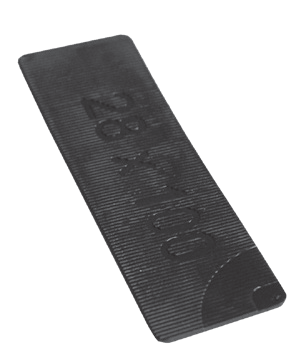
Our FP20 flat glazing packers are designed for 20 mm glazing systems and are well suited to uPVC window installations where accurate spacing and reliable support are important. We make them from polypropylene, so they are designed to resist compression, remain dimensionally stable under load, and perform consistently in everyday glazing work. That makes them a sensible option where sealed units need to stay level, properly supported, and securely positioned inside the frame.
What We Use 20mm Flat Glazing Packers For in uPVC Windows
In uPVC windows, we use our FP20 packers to help keep the glazed unit square, level, and correctly supported in the frame. Their job is not just to fill a gap, but to provide consistent spacing and support so the unit sits correctly and avoids unnecessary stress. Used properly, they help reduce the risk of glass edge pressure, cracking, rattling, and distortion over time.
Best Use 1: Providing Stable Support Under the Sealed Unit
One of the main uses of 20mm flat glazing packers in uPVC windows is supporting the sealed unit in a stable, non-compressible way. Because our FP20 packers are made for glazing support rather than makeshift spacing, they help create a more dependable setup than improvised materials. In standard uPVC window work, this is one of their most important roles.
Best Use 2: Levelling the Unit During Installation
We also use FP20 packers to level the unit during installation. The FP20 range is available in 1 mm, 2 mm, 3 mm, and 5 mm, which gives installers enough choice to deal with fine adjustments, light levelling, routine support, and heavier corrections. For uPVC windows, that means installers can match the thickness more closely to the actual support requirement instead of relying on one size for every situation.
Best Use 3: Handling Routine Everyday uPVC Window Jobs
Our 3 mm FP20 packers are especially useful for standard window installations because they are intended for typical window and door glazing, standard levelling, and general-purpose support. In practical terms, that makes 3 mm one of the strongest all-round options in the FP20 range for everyday uPVC work.
Best Use 4: Fine Corrections Where Only Small Adjustment Is Needed
Not every uPVC window needs a major correction. Sometimes the unit is already close to the right position and only needs a small adjustment. In those cases:
- 1 mm is useful for fine-tuning and final alignment
- 2 mm is useful for light levelling and minor spacing correction
These thinner options are especially helpful where the aim is to refine the fit without making a larger change than the job actually needs.
Best Use 5: Larger Support Jobs Within 20mm Glazing Systems
Where the window installation needs a more substantial correction or stronger support, our 5 mm FP20 packers come into play. We recommend them for:
- larger gaps
- heavier sealed units
- structural support and base packing
That makes them the heavy-support option within the FP20 range and particularly useful where a standard packer is not enough.
Common Mistake 1: Choosing the Thickness by Habit Instead of by Need
One common mistake in uPVC glazing work is choosing the same packer thickness on every job out of habit. With FP20, each thickness has a clearer role:
- 1 mm for fine finishing
- 2 mm for light correction
- 3 mm for standard installations
- 5 mm for larger support requirements
Treating them as interchangeable can lead to a fit that is either under-supported or more heavily packed than necessary.
Common Mistake 2: Using a Light Thickness Where the Job Clearly Needs More Support
Another common mistake is trying to make 1 mm or 2 mm do the work of a heavier packer. Those sizes are useful for smaller corrections, but where the unit is heavier or the gap is more substantial, 5 mm is the thickness designed for the job. Using too light a thickness can leave the support less robust than it should be.
Common Mistake 3: Overcomplicating a Simple Job
The FP20 range is deliberately compact, with only four thickness options. That makes it practical for installers who want straightforward decisions on site. A common mistake is to overcomplicate the choice when the actual job often comes down to a simple question: is this a fine-adjustment job, a standard-support job, or a heavier-support job? In many cases, once that is clear, the right thickness is easier to choose.
Common Mistake 4: Using Materials That Are Not Designed for Glazing Support
uPVC windows need support that remains consistent over time. Our FP20 packers are made from polypropylene and are designed to remain stable under load. Using materials that compress, shift, or deteriorate can compromise that support and create fitting issues later. For trade installations, using purpose-made glazing packers gives a cleaner and more reliable result.
Common Mistake 5: Not Keeping the Full Working Range Available
Because the FP20 range covers only 1 mm, 2 mm, 3 mm, and 5 mm, it can be tempting to stock only one or two sizes. In practice, keeping the full range available is often the better approach. uPVC window jobs vary, and having all four thicknesses on hand makes it easier to match the support to the installation rather than forcing the job to fit the stock you happen to have.
Why FP20 Works Well for Trade Installations
Our FP20 packers combine:
- 20 mm × 100 mm dimensions
- 1 mm, 2 mm, 3 mm, and 5 mm thickness options
- polypropylene construction
- suitability for uPVC, aluminium, and timber frames
- packs of 1000
- bulk trade pricing
- UK-held stock
For installers working repeatedly on uPVC windows, that makes FP20 a practical range to standardise around.
Final Thoughts
For uPVC windows, 20mm flat glazing packers work best when the thickness is matched properly to the job. Use 1 mm for fine finishing adjustments, 2 mm for light levelling, 3 mm for standard everyday glazing support, and 5 mm where the unit or gap needs stronger support. When used correctly, FP20 packers help create a more stable, accurate, and dependable uPVC window installation.