
Blog
Full Thickness Set vs Single Thickness Packers: Which Should Installers Buy?

When buying glazing packers, installers usually have two choices.
They can either buy a full thickness set, meaning a working range of thicknesses for the packer width they use, or they can buy single thickness packs, focusing only on the sizes they use most often.
Both approaches can make sense.
A full thickness set gives more flexibility on site. Single thickness packs are better when you already know which packers your team uses regularly.
The best choice depends on your workload, the type of installations you handle, and whether you are buying for one van, several installers, or a larger glazing company.
What Does a Full Thickness Set Mean?
A full thickness set means keeping all available thicknesses for a particular glazing packer width.
For example:
| Packer width | Full thickness range |
|---|---|
| 20mm flat glazing packers | 1mm, 2mm, 3mm, 4mm, 5mm, 6mm |
| 24mm flat glazing packers | 1mm, 2mm, 3mm, 4mm, 5mm, 6mm |
| 28mm flat glazing packers | 1mm, 2mm, 3mm, 4mm, 5mm, 6mm |
| 30mm flat glazing packers | 1mm, 2mm, 3mm, 4mm, 5mm, 6mm |
| 32mm flat glazing packers | 1mm, 2mm, 3mm, 4mm, 5mm, 6mm |
This does not necessarily mean buying a ready-made mixed pack. It means building your own working set by ordering the different thicknesses you need.
For trade installers, a full set is useful because every job is slightly different. Some jobs only need fine adjustment. Others need stronger support or larger correction.
What Does Buying Single Thickness Packers Mean?
Buying single thickness packers means ordering one specific thickness in bulk.
For example:
- 24mm flat glazing packers in 3mm only
- 28mm flat glazing packers in 5mm only
- 30mm flat glazing packers in 4mm only
- 32mm flat glazing packers in 5mm only
This is useful when you already know which thicknesses move fastest in your van or warehouse.
Single thickness buying is usually better for repeat stock, while full thickness buying is better when building a complete setup.
The Quick Answer
If you are starting from scratch, buy a full working thickness range first.
If you already know your usage pattern, buy single thickness packs of the sizes you use most.
A practical rule is:
- buy a full range when you need flexibility
- buy single thickness packs when you need to restock fast-moving sizes
- buy more 3mm, 4mm and 5mm than 1mm, 2mm and 6mm in most cases
For most trade buyers, the best approach is a combination of both.
When a Full Thickness Set Makes Sense
A full thickness set makes sense when you want to be prepared for different site conditions.
It is useful for:
- new installers building van stock
- glazing companies standardising stock
- mixed window and door jobs
- repair and maintenance work
- installers working across uPVC, aluminium and timber frames
- jobs where the gap size is not known before arriving on site
- teams that want to avoid improvising with unsuitable materials
A full set gives installers options. That is the main advantage.
Why Full Thickness Sets Help on Site
Installations are not always predictable.
One job may only need a 1mm adjustment. Another may need 5mm support. Another may need 3mm as the main packer with 1mm or 2mm added for fine correction.
If the installer only carries one thickness, they may have to compromise.
A full thickness set helps installers:
- make fine adjustments
- deal with uneven frames
- support heavier sealed units
- avoid unnecessary stacking
- choose the correct thickness for the job
- reduce the risk of using the wrong material
- finish jobs without leaving site for missing stock
This is especially useful when working on varied installation and repair jobs.
When Single Thickness Packs Make Sense
Single thickness packs make sense when you already know which sizes you use most often.
For many installers, certain thicknesses move faster than others. In glazing work, the most-used sizes are often the middle thicknesses.
Single thickness packs are useful when:
- you use one thickness regularly
- your team has a clear buying pattern
- you want to restock fast-moving sizes
- you do repetitive installation work
- you manage stock for multiple vans
- you want to avoid overbuying slow-moving thicknesses
For example, if your team uses 24mm 3mm packers every week, it makes sense to buy that thickness in larger quantity.
The Best Approach for Most Installers
Most installers should not choose only one method.
The best approach is usually:
- Build a full working thickness range.
- Track which thicknesses get used fastest.
- Reorder the fast-moving thicknesses as single packs.
- Keep slower-moving sizes available in lower quantities.
This gives you flexibility without creating unnecessary dead stock.
Which Thicknesses Usually Move Fastest?
For many window and door installers, the most useful everyday thicknesses are:
- 3mm
- 4mm
- 5mm
These are the sizes most likely to be used for standard support, moderate correction and stronger packing.
The smaller sizes, 1mm and 2mm, are important for adjustment.
The larger 6mm size is useful for larger gaps and heavier support points.
A good stock system treats these differently.
Core Thicknesses vs Adjustment Thicknesses
It helps to split packers into three groups.
Core Working Thicknesses
These are the packers installers are most likely to use regularly.
- 3mm
- 4mm
- 5mm
These are the thicknesses to buy in higher quantities.
Fine Adjustment Thicknesses
These are used when the job only needs a small correction.
- 1mm
- 2mm
These should be available, but they may not need to be stocked as heavily as core working sizes.
Larger Support Thicknesses
These are used when the job needs more correction or stronger support.
- 6mm
This is useful stock, but usually more job-specific than 3mm, 4mm or 5mm.
Full Thickness Set for 20mm Flat Glazing Packers
For 20mm flat glazing packers, the available thicknesses are:
- 1mm
- 2mm
- 3mm
- 4mm
- 5mm
- 6mm
A full 20mm thickness setup is useful if you work with narrower glazing systems or compact support points.
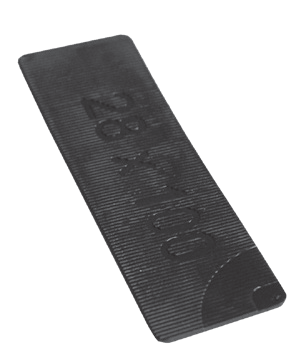
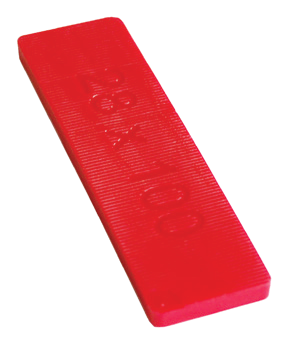
20mm Flat Glazing Packers
Price range: £21.99 through £148.94 Exc. VATThe practical stock priority is:
| Thickness | Stock priority |
|---|---|
| 1mm | Adjustment stock |
| 2mm | Adjustment stock |
| 3mm | Core working stock |
| 4mm | Core working stock |
| 5mm | Stronger support stock |
| 6mm | Larger gap stock |
Full Thickness Set for 24mm Flat Glazing Packers
For 24mm flat glazing packers, the available thicknesses are:
- 1mm
- 2mm
- 3mm
- 4mm
- 5mm
- 6mm
A full 24mm thickness setup is useful because 24mm is a versatile general-purpose packer size.
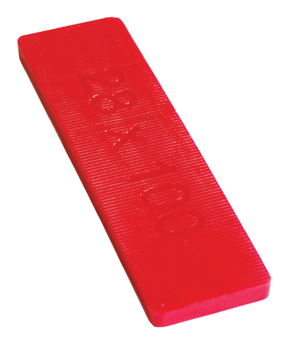
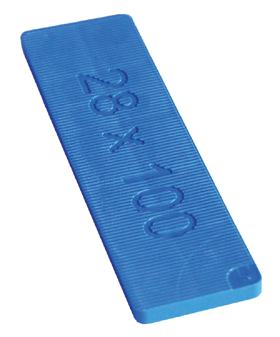
24mm Flat Glazing Packers
Price range: £23.99 through £171.94 Exc. VATThe practical stock priority is:
| Thickness | Stock priority |
|---|---|
| 1mm | Adjustment stock |
| 2mm | Adjustment stock |
| 3mm | Core working stock |
| 4mm | Core working stock |
| 5mm | Core working stock |
| 6mm | Larger gap / support stock |
Full Thickness Set for 28mm Flat Glazing Packers
For 28mm flat glazing packers, the available thicknesses are:
- 1mm
- 2mm
- 3mm
- 4mm
- 5mm
- 6mm
A full 28mm thickness setup is useful where installers work with wider systems, larger sealed units or stronger support points.
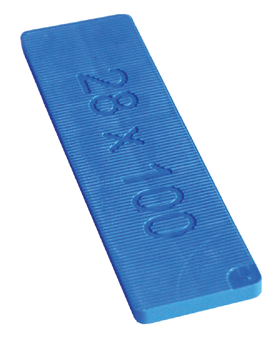
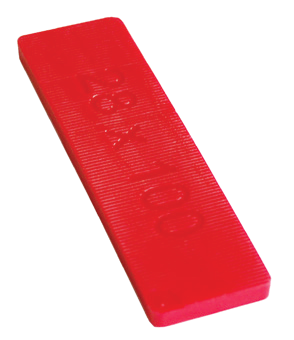
28mm Flat Glazing Packer
Price range: £24.99 through £178.94 Exc. VATThe practical stock priority is:
| Thickness | Stock priority |
|---|---|
| 1mm | Adjustment stock |
| 2mm | Adjustment stock |
| 3mm | Core working stock |
| 4mm | Core working stock |
| 5mm | Core working stock |
| 6mm | Larger gap / stronger support stock |
Full Thickness Set for 30mm Flat Glazing Packers
For 30mm flat glazing packers, the available thicknesses are:
- 1mm
- 2mm
- 3mm
- 4mm
- 5mm
- 6mm
A full 30mm thickness setup is useful for wider glazing systems and heavier units.
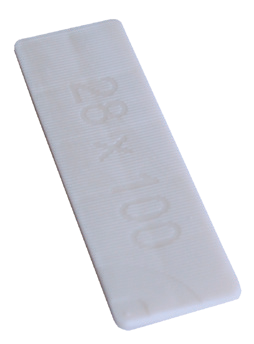
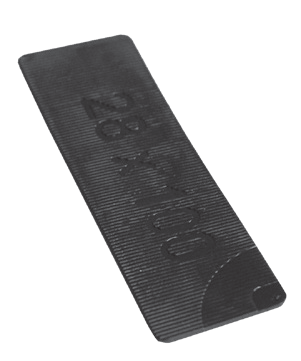
30mm Flat Glazing Packers
Price range: £24.99 through £189.94 Exc. VATThe practical stock priority is:
| Thickness | Stock priority |
|---|---|
| 1mm | Adjustment stock |
| 2mm | Adjustment stock |
| 3mm | Core working stock |
| 4mm | Core working stock |
| 5mm | Core working stock |
| 6mm | Larger gap / stronger support stock |
Full Thickness Set for 32mm Flat Glazing Packers
For 32mm flat glazing packers, the available thicknesses are:
- 1mm
- 2mm
- 3mm
- 4mm
- 5mm
- 6mm
A full 32mm thickness setup is useful for the widest systems and maximum support requirements.
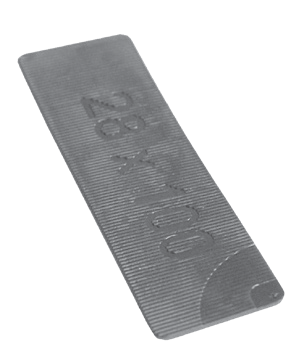
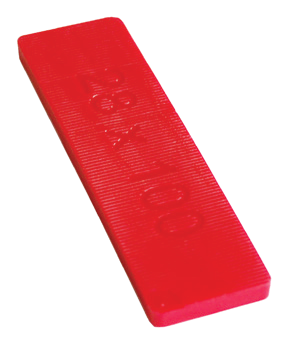
32mm Flat Glazing Packers
Price range: £26.99 through £210.94 Exc. VATThe practical stock priority is:
| Thickness | Stock priority |
|---|---|
| 1mm | Adjustment stock |
| 2mm | Adjustment stock |
| 3mm | Core working stock |
| 4mm | Core working stock |
| 5mm | Core working stock |
| 6mm | Larger gap / stronger support stock |
When a Full Set Is Better Than Single Thickness Packs
A full thickness set is better when flexibility matters more than speed of reordering.
Choose a full set when:
- you are building stock for the first time
- you do varied installation work
- you handle repairs and unknown site conditions
- you work across different frame types
- you want every van to carry a complete range
- you want to reduce improvisation on site
- you are not yet sure which thicknesses will move fastest
A full set reduces the chance of arriving on site without the correct thickness.
When Single Thickness Packs Are Better Than a Full Set
Single thickness packs are better when your usage is predictable.
Choose single thickness packs when:
- you already know your fast-moving sizes
- you need to restock a specific thickness
- your work is repetitive
- you want to buy more efficiently
- you already have adjustment sizes available
- you want to avoid tying up money in slow-moving stock
For example, if your team already has 1mm, 2mm and 6mm in stock but keeps running out of 24mm 4mm packers, there is no need to buy a full set again. Just restock the 4mm.
Buying Strategy for Self-Employed Installers
For a self-employed installer, the best approach is usually to build a compact but complete working range.
A practical setup would be:
- 20mm: 3mm, 4mm and 5mm first, then 1mm, 2mm and 6mm
- 24mm: 3mm, 4mm and 5mm first, then 1mm, 2mm and 6mm
- 28mm: 3mm, 4mm and 5mm first, then 1mm, 2mm and 6mm
- 30mm: 3mm, 4mm and 5mm first, then 1mm, 2mm and 6mm
- 32mm: 3mm, 4mm and 5mm first, then 1mm, 2mm and 6mm
This gives good flexibility without filling the van with unnecessary stock.
Once you know which sizes you use most, reorder those as single thickness packs.
Buying Strategy for Installation Companies
For installation companies, stock planning should be more structured.
A good company setup would be:
- full thickness range available in the warehouse
- core thicknesses issued to each van
- single thickness reorders for fast-moving sizes
- lower stock levels for adjustment sizes
- minimum reorder levels for 3mm, 4mm and 5mm packers
This avoids two problems: running out of common sizes and overbuying rarely used sizes.
Buying Strategy for Repair and Maintenance Work
Repair and maintenance work is less predictable than new installation work.
You may not know the exact frame, gap or support issue until you arrive on site.
For that reason, repair teams should carry a wider thickness range.
A full set is more useful for:
- service calls
- sealed unit replacement
- door adjustment work
- conservatory repairs
- mixed uPVC, aluminium and timber jobs
- older or inconsistent frames
In repair work, having the right adjustment size can save a return visit.
Buying Strategy for Bulk Trade Buyers
Bulk trade buyers should think in terms of usage groups.
A sensible buying plan is:
| Stock group | What to buy |
|---|---|
| High-use stock | 3mm, 4mm, 5mm |
| Adjustment stock | 1mm, 2mm |
| Specialist stock | 6mm |
| Width range | 20mm, 24mm, 28mm, 30mm, 32mm based on work type |
This helps you buy more of what moves quickly and enough of what is needed occasionally.
The Risk of Buying Only a Full Set
A full thickness set is useful, but it can create slow-moving stock if you keep buying every thickness in equal quantities.
For example, your team may use 3mm and 5mm every week but only use 1mm occasionally.
If you keep ordering every thickness equally, you may end up with too much adjustment stock and not enough core stock.
That is why a full set is best for initial coverage, not necessarily for every reorder.
The Risk of Buying Only One Thickness
Buying only one thickness can also create problems.
If you only carry one size, installers may have to:
- stack packers unnecessarily
- use the wrong thickness
- over-pack the unit
- under-support the unit
- improvise with unsuitable materials
- leave site to find missing sizes
Single thickness buying is efficient only when it is part of a wider stock system.
A Practical First Order
If you are buying glazing packers for regular installation work, a practical first order could include:
- 20mm 3mm
- 20mm 5mm
- 24mm 3mm
- 24mm 4mm
- 24mm 5mm
- 28mm 3mm
- 28mm 4mm
- 28mm 5mm
- 30mm 3mm
- 30mm 4mm
- 32mm 3mm
- 32mm 5mm
Then add:
- 1mm and 2mm adjustment sizes
- 6mm across widths where larger gaps are common
This gives you a strong working range while keeping the first order focused on the most useful thicknesses.
A Practical Reorder System
Once you have stock in place, do not reorder every size automatically.
Instead, separate your packers into three categories:
Reorder Frequently
These are the fast-moving sizes.
Usually:
- 3mm
- 4mm
- 5mm
Reorder Occasionally
These are useful but slower-moving sizes.
Usually:
- 1mm
- 2mm
- 6mm
Review Before Reordering
These are sizes that may depend heavily on your work type.
Examples:
- less-used widths
- specialist packers
- sizes used only on certain systems
This keeps your stock leaner and more useful.
Full Thickness Set vs Single Thickness: Simple Decision Guide
| Situation | Better choice |
|---|---|
| New installer building van stock | Full thickness range |
| Glazing company standardising stock | Full range first, then single thickness reorders |
| Replacing fast-moving stock | Single thickness packs |
| Repair and maintenance work | Full thickness range |
| Repetitive installation work | Single thickness packs for common sizes |
| Unknown site conditions | Full thickness range |
| Stocking multiple vans | Core range plus single thickness reorders |
| Avoiding slow-moving stock | Single thickness reorders after usage is known |
What Installers Should Not Do
Avoid these common buying mistakes:
- buying only one thickness for every job
- buying every thickness equally every time
- not carrying 1mm and 2mm for adjustment
- not carrying 5mm or 6mm for stronger support
- letting vans run out of 3mm, 4mm or 5mm
- relying on timber, cardboard or offcuts when the right packer is missing
- failing to track which sizes are actually being used
Good stock planning is not about buying every size in the same quantity. It is about buying the right sizes in the right quantities.
Final Recommendation
For most installers, the best answer is not full thickness set or single thickness packers.
The best answer is both.
Start with a full working range so you are prepared for different jobs. Then reorder your most-used thicknesses as single packs.
For many trade buyers, that means:
- keeping 1mm and 2mm for adjustment
- prioritising 3mm, 4mm and 5mm as core working stock
- keeping 6mm for larger gaps and stronger support
- stocking 20mm, 24mm, 28mm, 30mm and 32mm based on the systems you install
- reordering fast-moving sizes individually
This gives installers flexibility on site while keeping stock efficient.
Explore our glazing packer range: