
Blog
28mm Flat Glazing Packers for uPVC Windows: Best Uses and Common Mistakes

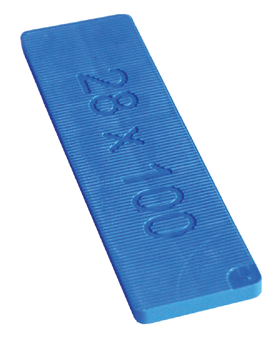
Our FP28 flat glazing packers are designed for 28 mm glazing systems and are suitable for uPVC window installations where accurate spacing, levelling, and support are essential. We make them from polypropylene, so they are non-compressible, rot-proof, weather-resistant, and built to retain their shape under load. That makes them a practical choice when you need dependable support under sealed units in uPVC frames.
What We Use 28mm Flat Glazing Packers For in uPVC Windows
In uPVC windows, we use 28mm flat glazing packers to help keep sealed units level, square, and properly supported. They are designed to provide consistent support under the glass, which helps with even load distribution, proper alignment, and long-term performance. They are also intended to help prevent issues such as frame distortion, gasket stress, and rattling, all of which matter in uPVC installations where poor support can create problems later.
Best Use 1: Supporting Sealed Units Correctly
One of the best uses for 28mm flat glazing packers in uPVC windows is simply providing proper support under the sealed unit. Because these packers are non-compressible and designed to keep the unit level and square, they help create a more stable installation and reduce the risk of movement over time. In everyday uPVC window work, this is one of the main reasons to use them.
Best Use 2: Levelling the Unit During Installation
We also use FP28 packers to level the unit accurately during installation. The thickness range of 1 mm to 6 mm allows us to move from very small corrections to more substantial adjustments, depending on how even the opening is and how much support is needed. That flexibility is especially useful with uPVC windows, where small differences in support can affect how well the unit sits in the frame.
Best Use 3: Choosing the Right Thickness for the Job
The FP28 range is useful because each thickness has a clear job to do:
- 1 mm works well for fine adjustment and final levelling
- 2 mm is suited to small spacing corrections and light levelling
- 3 mm is one of the most common sizes for general window installations
- 4 mm is useful for moderate gaps and slightly misaligned frames
- 5 mm is better for larger gaps, heavier sealed units, and stronger support
- 6 mm is best where significant correction or high load-bearing support is needed
For most uPVC window jobs, choosing the right thickness is just as important as choosing the right packer size.
Best Use 4: Dealing with Slightly Uneven uPVC Frames
Not every uPVC window opening is perfect, and some jobs need more than routine levelling. Our 4 mm, 5 mm, and 6 mm FP28 packers are particularly useful where there is noticeable unevenness, larger gaps, or a heavier load point that needs more support. In those cases, using a thicker packer is often a better approach than trying to make smaller sizes do a bigger job than they were meant for.
Best Use 5: Trade Jobs Where Consistency Matters
Because our FP28 packers are made to a consistent thickness and sold in packs of 1000, they are well suited to trade buyers and installation teams who want predictable results across multiple uPVC window jobs. We also offer bulk trade pricing, which makes them a sensible option for firms buying for repeat installations rather than one-off use.
Common Mistake 1: Using the Wrong Thickness
One of the most common mistakes is choosing a thickness by guesswork instead of matching it to the actual gap and support requirement. If the packer is too thin, the sealed unit may not be properly supported. If it is too thick, you can create unnecessary pressure, affect alignment, or make the installation harder than it needs to be. Our thickness range is there so installers can choose the correct level of support rather than forcing one size to do every job.
Common Mistake 2: Using a Light-Duty Thickness for a Heavy-Duty Job
Another mistake is using 1 mm or 2 mm packers where the job clearly needs more support. We position 5 mm and 6 mm packers for heavier sealed units, structural levelling, large gaps, and high load-bearing points, so where a uPVC installation needs stronger correction, it makes more sense to use a thickness designed for that purpose.
Common Mistake 3: Overcomplicating the Job by Stacking the Wrong Sizes
In practice, installers sometimes try to make up the required height by relying too heavily on smaller packers when a single thicker packer would be more suitable. Since the FP28 range already covers 1 mm to 6 mm, most uPVC window jobs can be handled more cleanly by selecting the closest appropriate thickness from the start. This usually leads to a tidier and more consistent installation.
Common Mistake 4: Using Packers Not Designed for Long-Term Stability
With uPVC windows, long-term stability matters just as much as getting the unit into place on the day. Our FP28 packers are made from polypropylene and are designed to be rot-proof, weather-resistant, and able to retain their shape under load. Using materials that compress, absorb moisture, or lose shape over time can undermine the support the sealed unit needs.
Common Mistake 5: Treating All uPVC Window Jobs the Same
Some uPVC windows only need fine adjustment, while others need more noticeable correction or heavier support. That is exactly why the FP28 range is split across six thicknesses, from fine levelling at 1 mm through to heavy-load applications at 6 mm. A more reliable approach is to assess the window first, then choose the thickness that matches the installation, rather than assuming the same size will suit every job.
Final Thoughts
For uPVC windows, 28mm flat glazing packers are best used where you need accurate spacing, dependable support, and consistent levelling under sealed units. They are especially useful because they combine a 28 mm × 100 mm format, a 1 mm to 6 mm thickness range, and a durable polypropylene construction that is suited to trade work. Used correctly, they help keep the unit level, square, and properly supported; used carelessly, the wrong thickness can create avoidable installation issues.